|
|
 |

NETBell Network Work Shift Timer with Buzzer
Description
The NETBell buzzer system is a network-based work shift timer designed to automate shift changes, breaks, and scheduled alerts using a connected industrial buzzer. The controller connects to a standard Ethernet network and maintains accurate time using network synchronization, allowing consistent signaling without mechanical timers or manual adjustment. Programming is performed through a web browser interface, and schedules are stored internally so the system operates independently after setup.
This configuration includes a NETBell network controller, industrial buzzer, power components, and installation hardware. The controller activates the buzzer at programmed times using an internal relay output, allowing standard 110VAC signaling devices to be used. Because scheduling is handled through the network interface, adjustments can be made without accessing the controller directly. The system is commonly installed when replacing mechanical timers or when schedules change frequently.
Network-based buzzer systems are typically used in manufacturing environments, warehouses, schools, and service facilities where audible alerts must remain consistent across departments. The buzzer provides a sharp signal that carries well in moderate to high noise environments. The system can also be expanded by adding additional signaling devices while maintaining a single timing source.
Compatibility and Usage
- NETBell network work shift timer controller
- Includes industrial 110VAC buzzer
- Web-based programming and scheduling
- Internal schedule storage for stand-alone operation
- Relay output compatible with standard bells or buzzers
- Used for shift changes, breaks, and scheduled alerts
FAQ
Does the system require a computer to run daily?
No. A computer is only required for setup or schedule changes.
Why choose a network timer instead of a mechanical timer?
Network synchronization prevents time drift and allows remote schedule adjustments.
Can additional buzzers be added later?
Yes. Additional signaling devices can be connected using appropriate relay wiring.
Related Items
- NETBell Network Bell Controller
- Industrial Vibrating Buzzer (110V)
- Manual Ring Button
- Bell and Buzzer Wire (25 ft / 50 ft / 100 ft / 250 ft)
- Surge Protector for Time Clocks
Employee Time Clocks has taken the work out of building either a standalone or networked break buzzer system with the all-in-one Netbell™-KB.
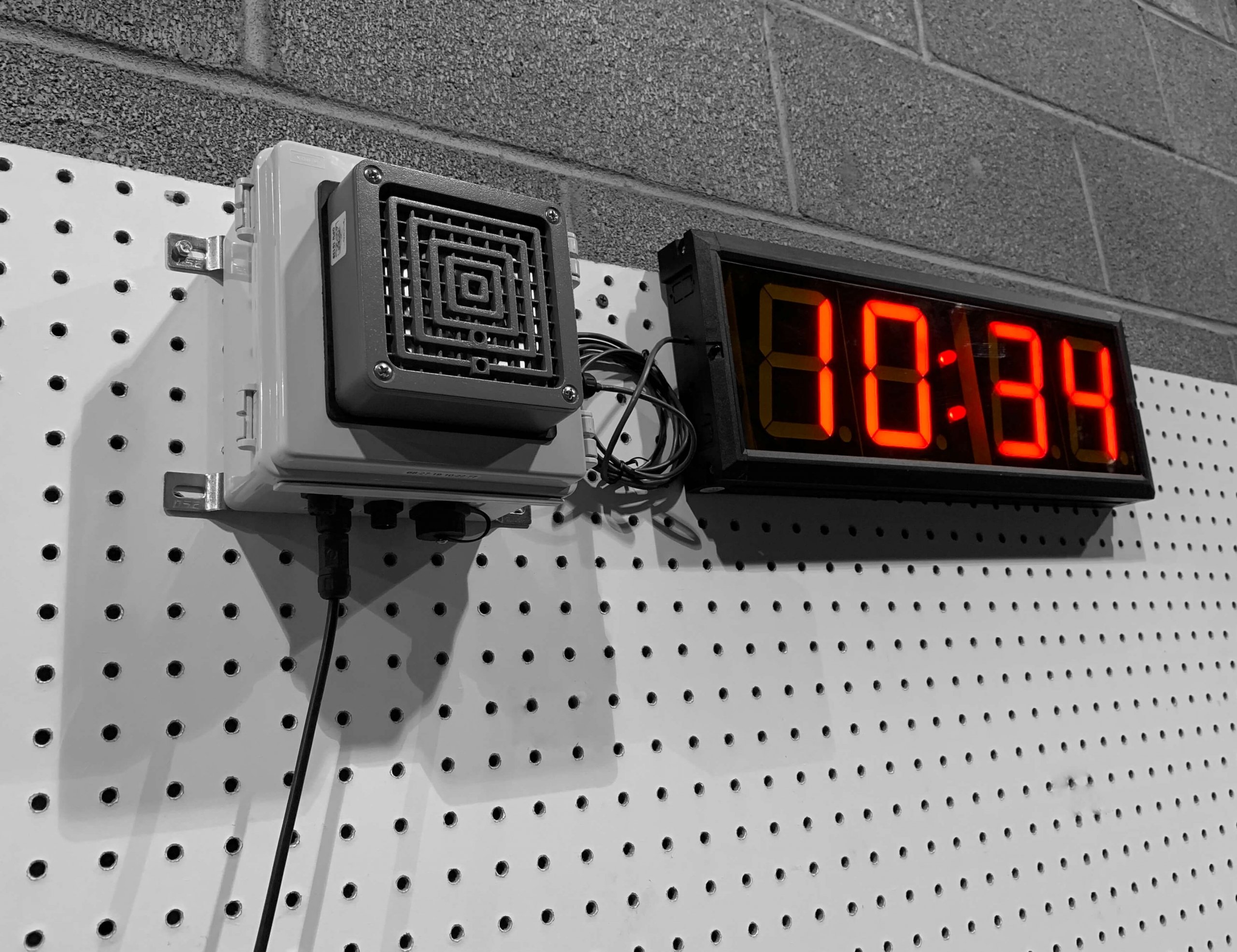
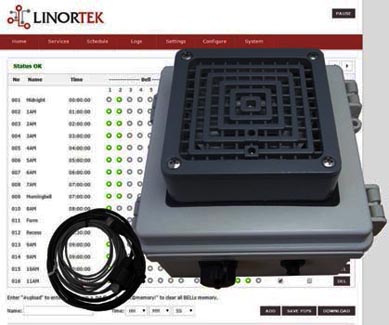
We use our tested Netbell™ platform, installed into a complete buzzer kit. Just pull the completely assembled buzzer out of its packaging, connect power and network with provided cables and it's ready to go. Use the amazing "Discovery" program to instantly find the Netbell™ server, then login to the web-based server located on the buzzer with a standard web browser and set up your schedules or download an existing schedule over the Internet. It can be installed anywhere on the network, and does not require a direct connection to a PC. Now it is easy for factories to have a fully automated web-based timed alert system for signaling shift changes, general alarm and breaks in areas of high ambient noise levels.
This is a low voltage break buzzer with a connection for one more buzzer. You can add one additional buzzer, up to 250' away with 18 gauge wire, or 500' with 16 gauge wire.
Intended to be an all-in-one solution, the Netbell-KB a high quality 4 inch high output buzzer (100dBa @10' ) and a completely wired web controller installed within a NEMA-rated box; all software and mounting hardware required for installation is included. It’s ready to go out of the box, and you need only connect the unit to power and the existing network with the provided cables; scheduling and setup is accessed through any web browser.
For those who wish to forego networking the Netbell-K, it is also able to function as a stand-alone device. Connecting the unit to a PC, upload the bell schedules, then remove, and it will function as scheduled. Whether stand-alone or networked, users can easily import/export their existing bell schedules using a simple text format.
The Key Features
- Up to 500 bell event schedules, 8 changeable ringing pulses for different events.
- Import/export bell schedules from existing data in text format.
- The built in web interface provides quick access to setup and manage your buzzer over the Internet, no additional software or designated computer required.
- Over 10,000 item log.
- Flexible and accurate control of when the bells ring (HH:MM:SS, SUNDAY-SATURDAY).
- Built-in real time clock synchronizing with NTP server every 10 minutes (user changeable)
- Completely configurable network settings including static or dynamic IP.
- Built in DynDNS interface.
- Password protection.
- Email notification of various user selectable events.
- Built in rechargeable battery for power fail backup.
- Program and web page interface are upgradable over the internet.
- Designed, developed and made in USA.
This has been going on for years:
People keep asking "How loud are your bells?"
Unfortunately, it's like describing a dinner at a restaurant. It depends on the environment.
Is it an empty room like a gymnasium? Does it have lots of rooms, or lots of background noise like a woodworking shop? Is this a warehouse with lots of rows of shelving and boxes of fabric?
Bells and buzzers all seem to max out at 102db. 102db is very loud.
110db is extremely loud, check out the YouTube video below.
In our experience, installing 2 to 3 bells or buzzers is much more effective than just one. Put one by the timer, then run wire out the another, 50 to 100' away. It won't be louder, it will just be more likely to be heard above all the background noise.
So, yours truly did some research recently (2016), this is interesting,
Using an Android phone decibel app, this is what we found:
**A bedroom at night in the country, windows closed: 28 - 32 db
**A bedroom at night in the city with the windows closed: 42- 46 db
**Office environment, people chattering: 62db
**American Airlines 737 inside. just behind the wing during takeoff: 86db
**Same jet, landing with the reverse thrusters on: 88db That ROAR you hear..
**Same jet, cruising for 3 hours, it's 82 to 86db. That's (partially) why flying is so tiring.
Shop buzzer's: 102db (Edwards, the ones we sell)
Other brands "hum" at 82 to 86.
Our bells test out at 98 to 103db depending on voltage
It seems that no one offers anything louder than 103db, unless it goes on a train, ocean liner, or fog horn. In some cases loudspeakers are used on farms; we don't have them, but our equipment will ring them. This is 110db, a train horn on an obnoxious person's pickup truck. In a working environment, this would clearly cause accidents.
https://www.youtube.com/watch?v=TiWNw0A1Ijg&feature=related
More bells or horns does not make it louder, it just makes it more pervasive - easier to hear through the machinery, across the rooms, over conversations and running equipment like compressors, lifts, packing tape, all that.
July 5, 2018 more to know:
A Fire Station Siren is 106 decibels. Our bells and buzzers are typically 98 to 102.
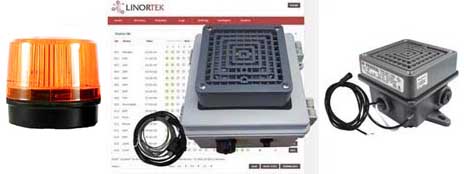
NetBuzzer with add-on amber strobe lights
NetBuzzer with additional low voltage buzzer and low voltage strobe light